










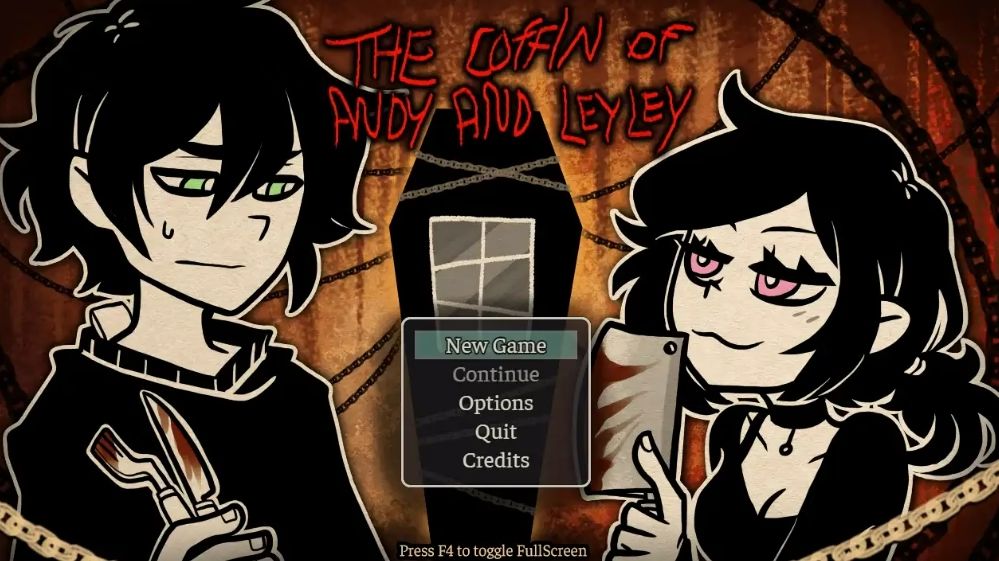
The Coffin of Andy and Leyley game cover

Browser Game

The Coffin of Andy and Leyley

a psychological horror adventure about siblings Andrew and Ashley surviving an impossible domestic crisis while their shared history turns shelter into obligation

Home Is Where He Is game card

Browser Horror

Home Is Where He Is

Cobb Can Move game card

Survival Horror

Cobb Can Move

Kingdom of Marionettes game card

Puppet Theater

Kingdom of Marionettes

Jackpot Crash Course game card

Casino Death Game

Jackpot Crash Course

Blood Money 2 game card

Dark Simulation

Blood Money 2

TADC Dating Sim game card

Romance Visual Novel

TADC Dating Sim

Survive Min game card

Psychological Horror

Survive Min

The False Sun game card

Farm Horror

The False Sun

Temple of the Jackal game card

Adult Pixel Puzzle

Temple of the Jackal

Uncanny Cat Golf game card

Surreal Mini Golf

Uncanny Cat Golf

Frankie's Fun House game card

Point-and-Click Mystery

Frankie's Fun House

Death Spiral game card

One-Button Horror

Death Spiral

The Coffin of Andy and Leyley game card

Sibling Horror

The Coffin of Andy and Leyley

Original Guide

About The Coffin of Andy and Leyley

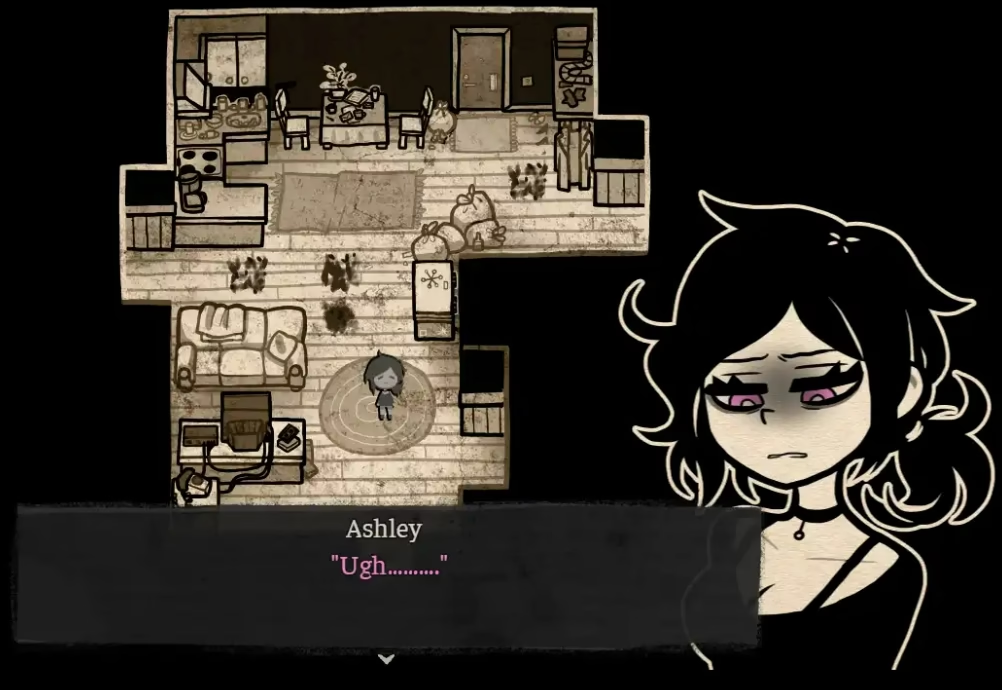
A Home Reduced to One Apartment

Confinement removes the public world until Andrew and Ashley become each other's shelter, witness, and threat. The Coffin of Andy and Leyley makes domestic space frightening because it remains recognizable. A confined apartment and the rooms beyond it repeat the emotional logic of a home where practical cooperation, secrecy, violence, and family memory cannot be separated. A table, hallway, locked door, or carried object still serves an ordinary purpose, yet scarcity and secrecy change who controls that purpose. Home stops being a place guaranteed by walls and becomes an agreement about who may belong, who must protect the agreement, and what each person is expected to surrender in return.

Read the floor plan as an emotional map rather than neutral scenery. Exploration should therefore include emotional architecture. exploring rooms, gathering objects, solving environmental problems, reading dialogue, and following decisions that reveal who controls the meaning of loyalty. As each room opens, ask whether the siblings gain a real option or merely acquire another method for maintaining the same bond. Andrew and Ashley can be effective partners while disagreeing about what survival is for. One imagines distance as a route toward identity; the other can treat distance as betrayal. Their conflict turns movement through space into an argument about whether either person is allowed an outside.

This Home Is Where He Is edition focuses on belonging rather than route optimization. home remains physically necessary even when the relationship defining it has become possessive, coercive, and dangerous. Trace one promise about family or protection across the route and compare how its meaning changes after each compromise. A careful second run does not need to reverse every decision. It can follow one promise about family, shelter, or protection and observe when the promise changes from reassurance into a rule. That approach preserves ambiguity while making coercion visible. It contains violence, death, coercive family dynamics, criminal behavior, cannibalism references, disturbing imagery, and mature psychological horror. The player should keep the same freedom the characters struggle to recover: pause, leave fullscreen, or stop whenever the material becomes too heavy.

The Coffin of Andy and Leyley home and confinement scene 1

Food, Doors, and Routine Define Belonging

Small domestic resources reveal who is expected to provide, wait, obey, or improvise. The Coffin of Andy and Leyley makes domestic space frightening because it remains recognizable. A confined apartment and the rooms beyond it repeat the emotional logic of a home where practical cooperation, secrecy, violence, and family memory cannot be separated. A table, hallway, locked door, or carried object still serves an ordinary purpose, yet scarcity and secrecy change who controls that purpose. Home stops being a place guaranteed by walls and becomes an agreement about who may belong, who must protect the agreement, and what each person is expected to surrender in return.

Notice which ordinary task becomes evidence of loyalty. Exploration should therefore include emotional architecture. exploring rooms, gathering objects, solving environmental problems, reading dialogue, and following decisions that reveal who controls the meaning of loyalty. As each room opens, ask whether the siblings gain a real option or merely acquire another method for maintaining the same bond. Andrew and Ashley can be effective partners while disagreeing about what survival is for. One imagines distance as a route toward identity; the other can treat distance as betrayal. Their conflict turns movement through space into an argument about whether either person is allowed an outside.

This Home Is Where He Is edition focuses on belonging rather than route optimization. home remains physically necessary even when the relationship defining it has become possessive, coercive, and dangerous. Trace one promise about family or protection across the route and compare how its meaning changes after each compromise. A careful second run does not need to reverse every decision. It can follow one promise about family, shelter, or protection and observe when the promise changes from reassurance into a rule. That approach preserves ambiguity while making coercion visible. It contains violence, death, coercive family dynamics, criminal behavior, cannibalism references, disturbing imagery, and mature psychological horror. The player should keep the same freedom the characters struggle to recover: pause, leave fullscreen, or stop whenever the material becomes too heavy.
The Coffin of Andy and Leyley home and confinement scene 2

Andrew Tries to Imagine an Outside

His distance suggests that survival is not enough if the relationship decides every future identity. The Coffin of Andy and Leyley makes domestic space frightening because it remains recognizable. A confined apartment and the rooms beyond it repeat the emotional logic of a home where practical cooperation, secrecy, violence, and family memory cannot be separated. A table, hallway, locked door, or carried object still serves an ordinary purpose, yet scarcity and secrecy change who controls that purpose. Home stops being a place guaranteed by walls and becomes an agreement about who may belong, who must protect the agreement, and what each person is expected to surrender in return.

Compare what he wants privately with what he agrees to aloud. Exploration should therefore include emotional architecture. exploring rooms, gathering objects, solving environmental problems, reading dialogue, and following decisions that reveal who controls the meaning of loyalty. As each room opens, ask whether the siblings gain a real option or merely acquire another method for maintaining the same bond. Andrew and Ashley can be effective partners while disagreeing about what survival is for. One imagines distance as a route toward identity; the other can treat distance as betrayal. Their conflict turns movement through space into an argument about whether either person is allowed an outside.

This Home Is Where He Is edition focuses on belonging rather than route optimization. home remains physically necessary even when the relationship defining it has become possessive, coercive, and dangerous. Trace one promise about family or protection across the route and compare how its meaning changes after each compromise. A careful second run does not need to reverse every decision. It can follow one promise about family, shelter, or protection and observe when the promise changes from reassurance into a rule. That approach preserves ambiguity while making coercion visible. It contains violence, death, coercive family dynamics, criminal behavior, cannibalism references, disturbing imagery, and mature psychological horror. The player should keep the same freedom the characters struggle to recover: pause, leave fullscreen, or stop whenever the material becomes too heavy.

The Coffin of Andy and Leyley home and confinement scene 3

Ashley Makes the Pair Feel Inevitable

Her force and confidence can turn shared history into a claim that no alternative home is possible. The Coffin of Andy and Leyley makes domestic space frightening because it remains recognizable. A confined apartment and the rooms beyond it repeat the emotional logic of a home where practical cooperation, secrecy, violence, and family memory cannot be separated. A table, hallway, locked door, or carried object still serves an ordinary purpose, yet scarcity and secrecy change who controls that purpose. Home stops being a place guaranteed by walls and becomes an agreement about who may belong, who must protect the agreement, and what each person is expected to surrender in return.

Ask when protection begins removing the protected person's options. Exploration should therefore include emotional architecture. exploring rooms, gathering objects, solving environmental problems, reading dialogue, and following decisions that reveal who controls the meaning of loyalty. As each room opens, ask whether the siblings gain a real option or merely acquire another method for maintaining the same bond. Andrew and Ashley can be effective partners while disagreeing about what survival is for. One imagines distance as a route toward identity; the other can treat distance as betrayal. Their conflict turns movement through space into an argument about whether either person is allowed an outside.

This Home Is Where He Is edition focuses on belonging rather than route optimization. home remains physically necessary even when the relationship defining it has become possessive, coercive, and dangerous. Trace one promise about family or protection across the route and compare how its meaning changes after each compromise. A careful second run does not need to reverse every decision. It can follow one promise about family, shelter, or protection and observe when the promise changes from reassurance into a rule. That approach preserves ambiguity while making coercion visible. It contains violence, death, coercive family dynamics, criminal behavior, cannibalism references, disturbing imagery, and mature psychological horror. The player should keep the same freedom the characters struggle to recover: pause, leave fullscreen, or stop whenever the material becomes too heavy.

The Coffin of Andy and Leyley home and confinement scene 4

The Apartment Stores Family History

Rooms and objects carry earlier roles into present decisions, making old patterns feel natural. The Coffin of Andy and Leyley makes domestic space frightening because it remains recognizable. A confined apartment and the rooms beyond it repeat the emotional logic of a home where practical cooperation, secrecy, violence, and family memory cannot be separated. A table, hallway, locked door, or carried object still serves an ordinary purpose, yet scarcity and secrecy change who controls that purpose. Home stops being a place guaranteed by walls and becomes an agreement about who may belong, who must protect the agreement, and what each person is expected to surrender in return.

Separate what the space remembers from what the characters must repeat. Exploration should therefore include emotional architecture. exploring rooms, gathering objects, solving environmental problems, reading dialogue, and following decisions that reveal who controls the meaning of loyalty. As each room opens, ask whether the siblings gain a real option or merely acquire another method for maintaining the same bond. Andrew and Ashley can be effective partners while disagreeing about what survival is for. One imagines distance as a route toward identity; the other can treat distance as betrayal. Their conflict turns movement through space into an argument about whether either person is allowed an outside.

This Home Is Where He Is edition focuses on belonging rather than route optimization. home remains physically necessary even when the relationship defining it has become possessive, coercive, and dangerous. Trace one promise about family or protection across the route and compare how its meaning changes after each compromise. A careful second run does not need to reverse every decision. It can follow one promise about family, shelter, or protection and observe when the promise changes from reassurance into a rule. That approach preserves ambiguity while making coercion visible. It contains violence, death, coercive family dynamics, criminal behavior, cannibalism references, disturbing imagery, and mature psychological horror. The player should keep the same freedom the characters struggle to recover: pause, leave fullscreen, or stop whenever the material becomes too heavy.

The Coffin of Andy and Leyley home and confinement scene 5

Escape Does Not Automatically Create Freedom

Leaving one room cannot resolve a system of loyalty, secrecy, and blame that travels with the siblings. The Coffin of Andy and Leyley makes domestic space frightening because it remains recognizable. A confined apartment and the rooms beyond it repeat the emotional logic of a home where practical cooperation, secrecy, violence, and family memory cannot be separated. A table, hallway, locked door, or carried object still serves an ordinary purpose, yet scarcity and secrecy change who controls that purpose. Home stops being a place guaranteed by walls and becomes an agreement about who may belong, who must protect the agreement, and what each person is expected to surrender in return.

Judge progress by recovered choices rather than physical distance. Exploration should therefore include emotional architecture. exploring rooms, gathering objects, solving environmental problems, reading dialogue, and following decisions that reveal who controls the meaning of loyalty. As each room opens, ask whether the siblings gain a real option or merely acquire another method for maintaining the same bond. Andrew and Ashley can be effective partners while disagreeing about what survival is for. One imagines distance as a route toward identity; the other can treat distance as betrayal. Their conflict turns movement through space into an argument about whether either person is allowed an outside.

This Home Is Where He Is edition focuses on belonging rather than route optimization. home remains physically necessary even when the relationship defining it has become possessive, coercive, and dangerous. Trace one promise about family or protection across the route and compare how its meaning changes after each compromise. A careful second run does not need to reverse every decision. It can follow one promise about family, shelter, or protection and observe when the promise changes from reassurance into a rule. That approach preserves ambiguity while making coercion visible. It contains violence, death, coercive family dynamics, criminal behavior, cannibalism references, disturbing imagery, and mature psychological horror. The player should keep the same freedom the characters struggle to recover: pause, leave fullscreen, or stop whenever the material becomes too heavy.

The Coffin of Andy and Leyley home and confinement scene 6

Replay Changes the Meaning of Familiarity

Later knowledge can make an early kindness look protective, strategic, fearful, or possessive. The Coffin of Andy and Leyley makes domestic space frightening because it remains recognizable. A confined apartment and the rooms beyond it repeat the emotional logic of a home where practical cooperation, secrecy, violence, and family memory cannot be separated. A table, hallway, locked door, or carried object still serves an ordinary purpose, yet scarcity and secrecy change who controls that purpose. Home stops being a place guaranteed by walls and becomes an agreement about who may belong, who must protect the agreement, and what each person is expected to surrender in return.

Revisit one domestic gesture and trace its echoes through the route. Exploration should therefore include emotional architecture. exploring rooms, gathering objects, solving environmental problems, reading dialogue, and following decisions that reveal who controls the meaning of loyalty. As each room opens, ask whether the siblings gain a real option or merely acquire another method for maintaining the same bond. Andrew and Ashley can be effective partners while disagreeing about what survival is for. One imagines distance as a route toward identity; the other can treat distance as betrayal. Their conflict turns movement through space into an argument about whether either person is allowed an outside.

This Home Is Where He Is edition focuses on belonging rather than route optimization. home remains physically necessary even when the relationship defining it has become possessive, coercive, and dangerous. Trace one promise about family or protection across the route and compare how its meaning changes after each compromise. A careful second run does not need to reverse every decision. It can follow one promise about family, shelter, or protection and observe when the promise changes from reassurance into a rule. That approach preserves ambiguity while making coercion visible. It contains violence, death, coercive family dynamics, criminal behavior, cannibalism references, disturbing imagery, and mature psychological horror. The player should keep the same freedom the characters struggle to recover: pause, leave fullscreen, or stop whenever the material becomes too heavy.

The Coffin of Andy and Leyley home and confinement scene 7

Browser Play Needs a Safe Exit

Mature horror can become intense when a long session keeps the player inside the same emotional space. The Coffin of Andy and Leyley makes domestic space frightening because it remains recognizable. A confined apartment and the rooms beyond it repeat the emotional logic of a home where practical cooperation, secrecy, violence, and family memory cannot be separated. A table, hallway, locked door, or carried object still serves an ordinary purpose, yet scarcity and secrecy change who controls that purpose. Home stops being a place guaranteed by walls and becomes an agreement about who may belong, who must protect the agreement, and what each person is expected to surrender in return.

Use fullscreen for clarity while preserving breaks, comfortable sound, and the option to stop. Exploration should therefore include emotional architecture. exploring rooms, gathering objects, solving environmental problems, reading dialogue, and following decisions that reveal who controls the meaning of loyalty. As each room opens, ask whether the siblings gain a real option or merely acquire another method for maintaining the same bond. Andrew and Ashley can be effective partners while disagreeing about what survival is for. One imagines distance as a route toward identity; the other can treat distance as betrayal. Their conflict turns movement through space into an argument about whether either person is allowed an outside.

This Home Is Where He Is edition focuses on belonging rather than route optimization. home remains physically necessary even when the relationship defining it has become possessive, coercive, and dangerous. Trace one promise about family or protection across the route and compare how its meaning changes after each compromise. A careful second run does not need to reverse every decision. It can follow one promise about family, shelter, or protection and observe when the promise changes from reassurance into a rule. That approach preserves ambiguity while making coercion visible. It contains violence, death, coercive family dynamics, criminal behavior, cannibalism references, disturbing imagery, and mature psychological horror. The player should keep the same freedom the characters struggle to recover: pause, leave fullscreen, or stop whenever the material becomes too heavy.

The Coffin of Andy and Leyley home and confinement scene 8

The Coffin of Andy and Leyley Videos

The Coffin of Andy and Leyley FAQ

What is The Coffin of Andy and Leyley?

The Coffin of Andy and Leyley is a psychological horror adventure about siblings Andrew and Ashley surviving an impossible domestic crisis while their shared history turns shelter into obligation.

Can I play The Coffin of Andy and Leyley online?

Yes. Launch the embedded browser build above without downloading a separate installer first.

How does exploration work?

Players move through rooms, collect objects, solve environmental problems, and read dialogue that changes the meaning of each space.

Why is the apartment important?

It is both physical shelter and an emotional system that determines responsibility, dependence, and who is allowed to imagine leaving.

Does the game reward replay?

Yes. Later context changes how early promises, objects, family memories, and domestic routines can be interpreted.

Can I play on mobile?

A current mobile browser may work, though desktop fullscreen provides clearer room details and dialogue.

What should I do if the iframe does not load?

Wait for remote files, click the frame, refresh once, and check extensions or networks that block embedded games.

Where are saves stored?

Progress may use browser storage, so clearing data, changing profiles, or private mode can remove a save.

Is the game appropriate for children?

No. It contains violence, death, coercive family dynamics, criminal behavior, cannibalism references, disturbing imagery, and mature psychological horror.